
4. What else do I need to help me assess my baby?
What other things to I need?
You have learnt about the CHAT. But to be able to use it correctly and safely, there are other things to do. Your baby will need regular checks of:
- Oxygen saturation level.
- Weight.
Regular checks of oxygen saturations will help you and healthcare professionals to know how well your baby’s heart is working.
Regular checks of your baby’s weight will help to assess your baby’s nutrition (feeding) and growth. Weight will also help assess how well your baby’s heart is working.
If your baby needs care from a dietitian (an expert on feeding and growth) then being weighed regularly will be very helpful.
You will also need to use the CHAT booklet.
In this section, the following questions will be answered:
- How will my baby’s oxygen saturations and weight be checked?
- Why do I need the CHAT booklet?
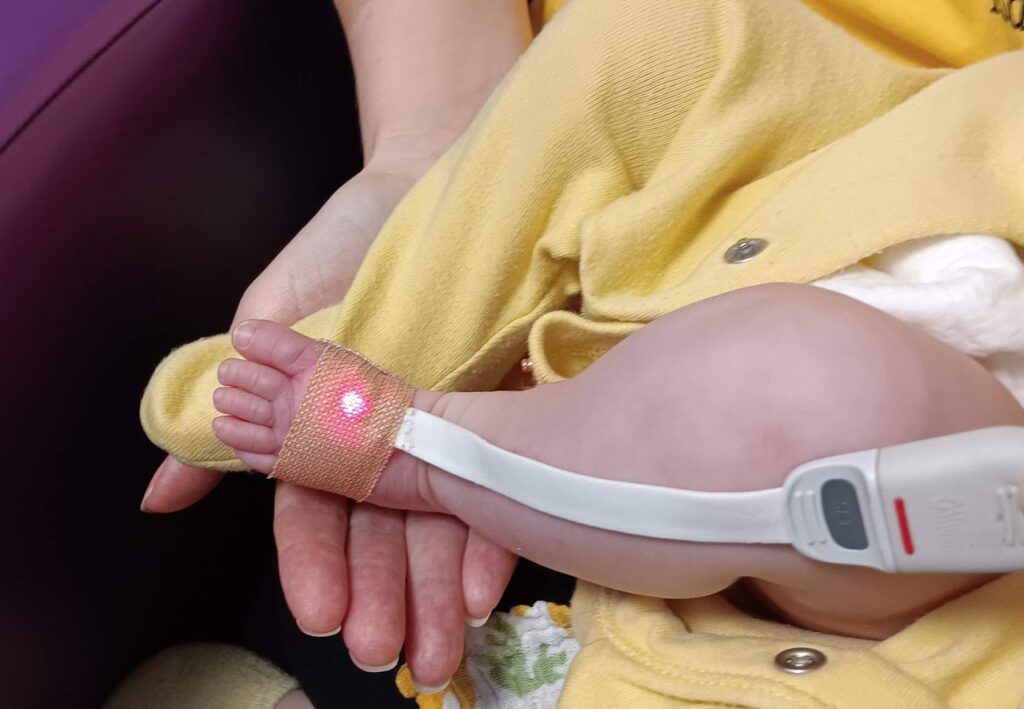
How will my baby’s oxygen saturations and weight be checked?
How often will oxygen saturations and weight be checked?
Your cardiac health care professionals will decide how often your baby will need to have oxygen saturation and weight checked. This could be:
- Once a week.
- A couple of times a week.
- Every two weeks.
For some babies it could be once a month.
This will depend on:
- The type of heart problem your baby has.
- The type of surgery your baby had.
- How well your baby is doing at the time of going home.
As time goes by, there might be a change to how often this is checked. There might be a need to check more often. Or check it less often. This will be decided by your baby’s cardiac health professional. You will be told why there is a change.
Who will check my baby’s oxygen saturations and weight?
A healthcare professional will check your baby. This could be done:
- At your baby’s Cardiac Centre – in the heart clinic.
- At your baby’s local hospital – at a children’s clinic or children’s ward.
- At home by a Community Nurse.
You will be told who will be checking your baby. Your cardiac nurse will also contact them to book an appointment for your baby. You will also have an appointment for the first clinic visit to see your baby’s Cardiac Consultant.
If the community nurse comes to your home, this person will stay with you for a while on the first visit. This is so they can get to know you and your baby and understand how they can help you. They will need to be told about the CHAT.
When you go home, you will be given written information about the care your baby has had. This will include information about the surgery, the medical care afterwards and the medication your baby is taking. You will be given copies to give to your baby’s General Practitioner, Health Visitor, local pharmacist and the Community Nurse if you are going to get home visits.
You will also be given a Discharge Booklet which will contains lots of advice on caring for your baby at home. For example, advice on looking after your baby’s surgical wound; how to get medicine; baby vaccinations.
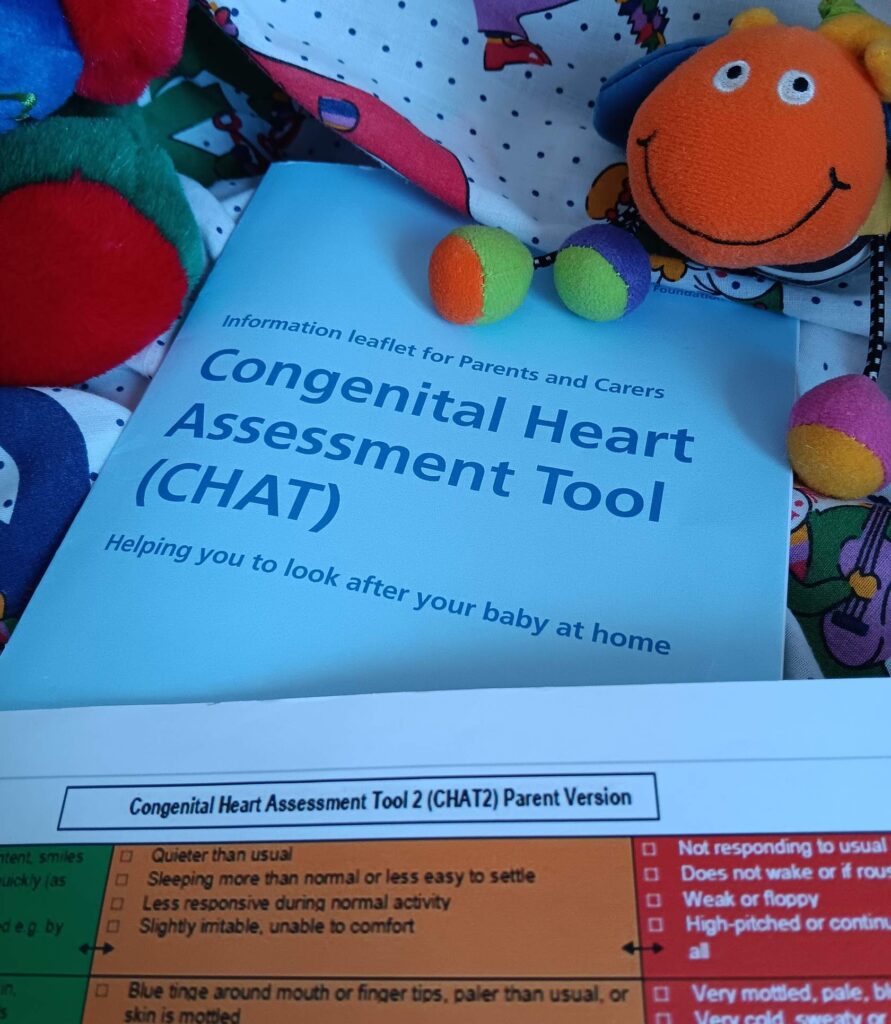
Why do I need the CHAT booklet?
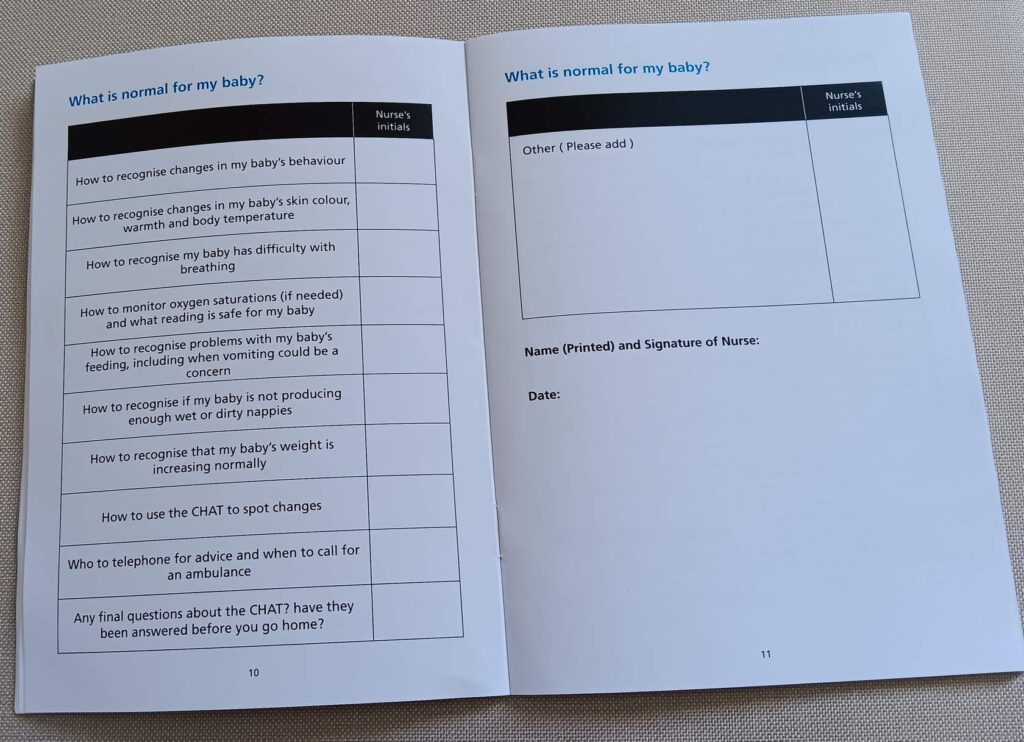
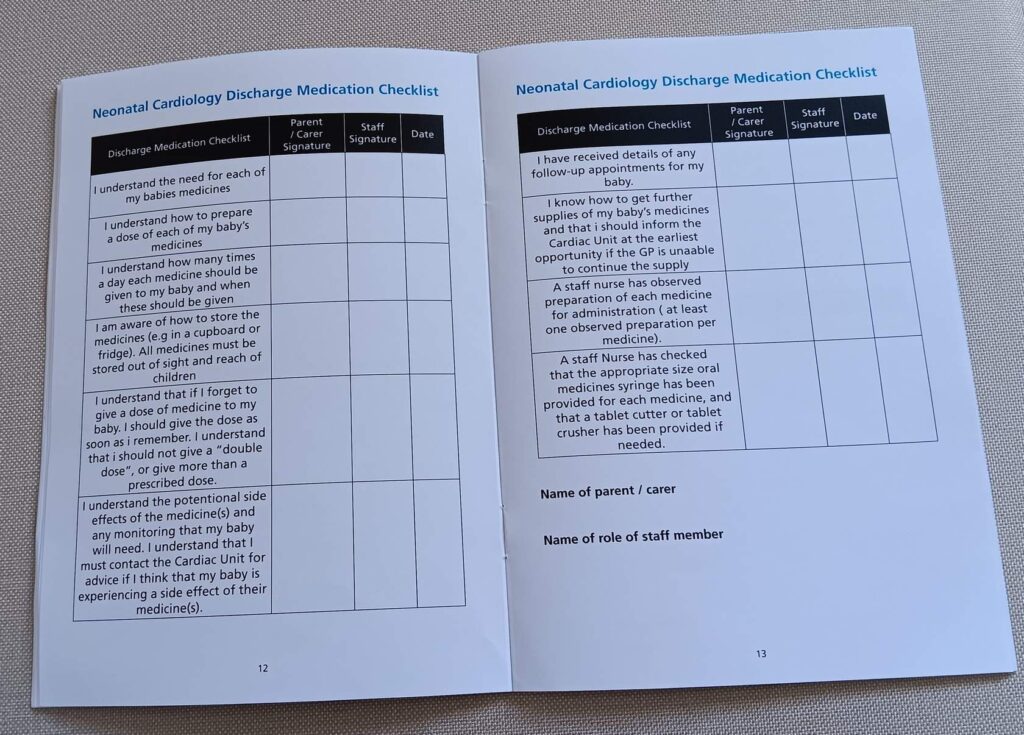
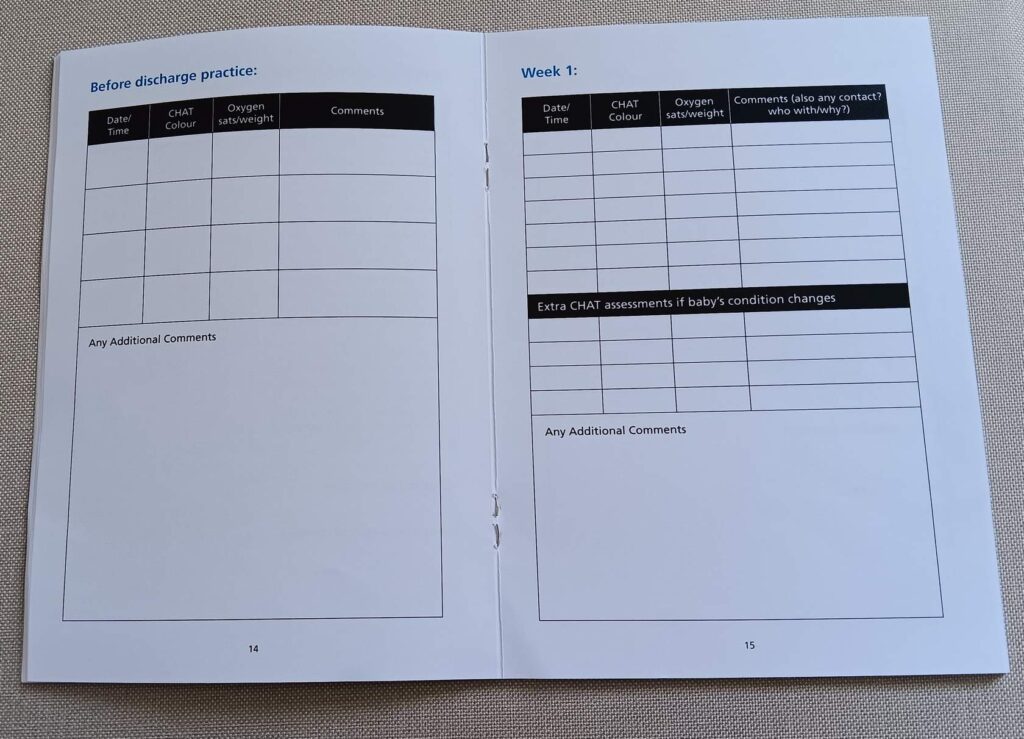
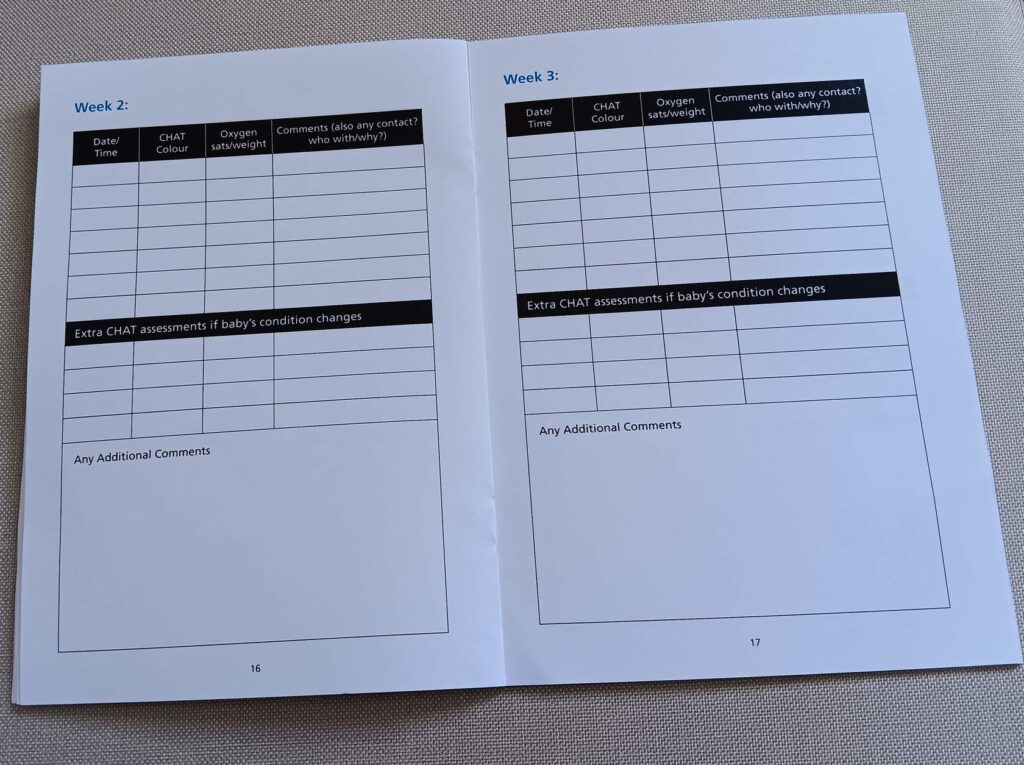
The CHAT booklet is where you keep a record of what you have assessed, and the oxygen saturation and weight measurements. You can also write down decisions you have made and actions you have taken.
The best way to learn about the CHAT booklet is to have it explained to you by a healthcare professional. Your cardiac nurse or Cardiac Specialist Nurse will support you to practice using this booklet before you take your baby home.
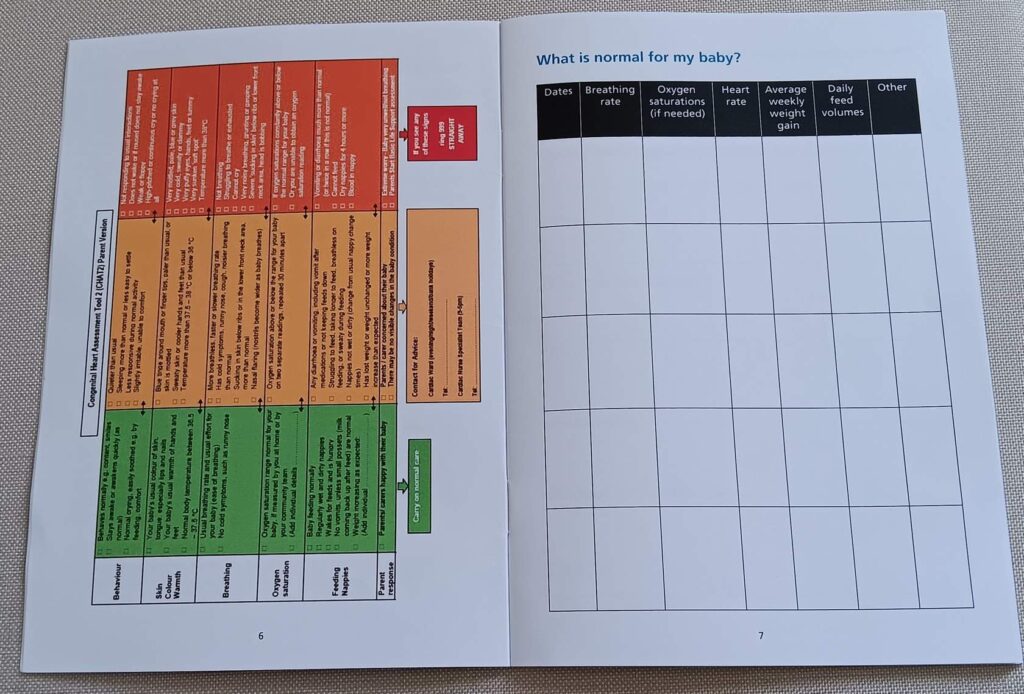
However, there are a few things to help you prepare. In the booklet you will find:
- The CHAT traffic colour sections.
- Details of what is normal for your baby.
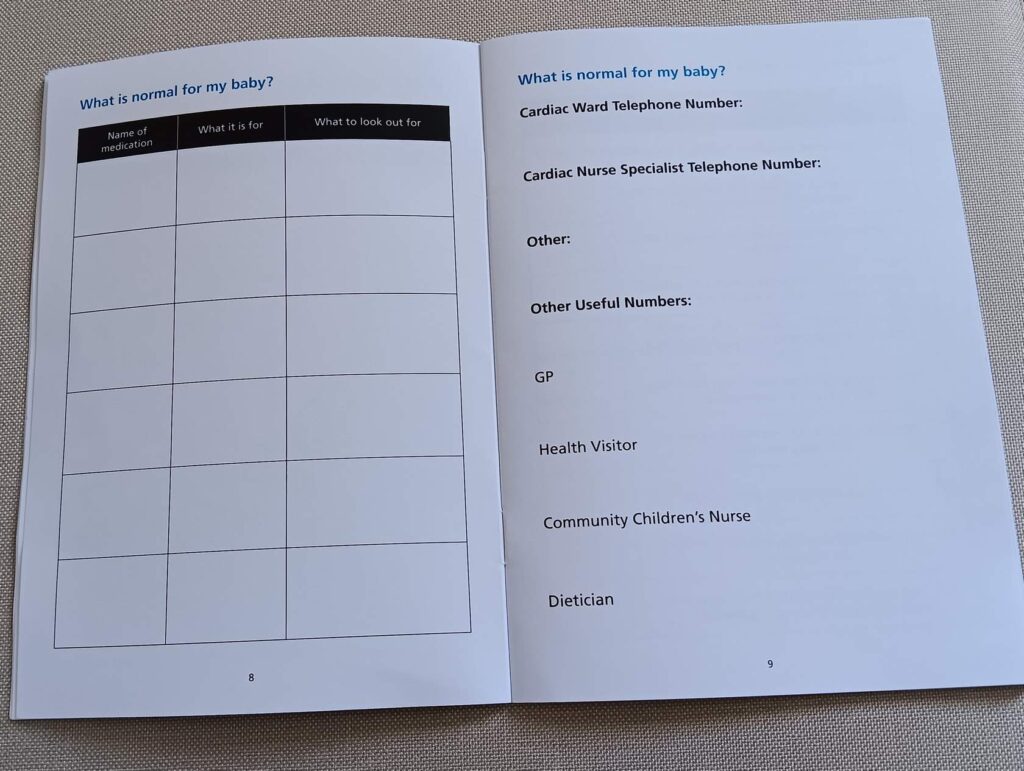
- A page for names and telephone numbers of health care professionals you might need to contact.
- A checklist to make sure you know how to assess your baby.
- A checklist to make sure you understand your baby’s medication.
- Pages for you to record the CHAT colour, and your baby’s weight and oxygen saturation levels. And anything you have decided to do.
The CHAT booklet is like having a diary that helps you to remember important things about your baby.
You will be given the CHAT booklet before you go home.
Click on the arrow at the right side of the picture below. Then click again, to see more of the pages where important information will need to be recorded:
Parents have found the CHAT booklet useful. This is what one parent has said:

“I enjoy the CHAT and I enjoy the diary thing, I think that’s very good and I’m really appreciative of it because it does put you at ease knowing that you’ve got everything written in the diary as well“
Parent experience of using the CHAT booklet
Summary of information.
Click on the cards below:
How will my baby’s oxygen saturations and weight be checked?
How often?
- Once a week.
- A couple of times a week.
- Every two weeks.
- Once a month – for some babies.
Who will check?
- A healthcare professional.
Where could this be done?
- At your baby’s Cardiac Centre – in the heart clinic.
- At your baby’s local hospital – a children’s clinic or children’s ward.
- At home by a Community Nurse.
Why do I need the CHAT booklet?
The CHAT booklet is where you keep a record of things about your baby.
It is like having a diary that helps you to remember important things.
It contains:
- The CHAT traffic colour sections.
- Details of what is normal for your baby.
- A page for names and telephone numbers of health care professionals you might need to contact.
- A checklist to make sure you know how to assess your baby.
- A checklist to make sure you understand your baby’s medication.
- Pages for you to record the CHAT colour, and your baby’s weight and oxygen saturation levels. And anything you have decided to do.